
Pond Construction & Engineering
Build to last. Learn about liner selection, installation techniques, dredging, and designing natural swimming ponds with professional guidance.
Whether you're building a new pond or renovating an existing one, construction decisions made today affect your water body for decades. Choosing the right liner type, understanding installation best practices, and planning for future maintenance are critical to long-term success.
Modern pond construction integrates engineering, ecology, and aesthetics. From small backyard ponds to larger recreational water bodies, and specialized designs like natural swimming ponds, each project requires understanding how to balance functionality with ecological health and regulatory compliance.
Liner selection matters: Synthetic rubber, plastic films, and clay liners each have different durability, cost, and ecological profiles. The right choice depends on your pond size, depth, soil conditions, expected lifespan, and intended use.
Installation is critical: Even the best liner fails if installed poorly. Proper excavation, subgrade preparation, seaming, and edge detailing are non-negotiable. Professional installation often pays for itself through reliability and warranty protection.
Dredging: When and how: Dredging removes accumulated sediment but is expensive and disruptive. Understanding when dredging is necessary versus when biological management suffices helps you make economical decisions.
Natural swimming ponds: These specialized systems combine aesthetics, recreation, and ecological function. They require careful design integration with filtration and circulation.
Planning a construction project? Contact support@naturalwaterscapes.com with site details and project goals.
Planning a New Pond
A successful pond comes down to the decisions made before construction. Start with what you want from the pond and what the site can support.

Plan a pond around soils, water balance, permits, habitat, aeration and compaction. Review documented projects and the planned Pond Planner scope.
Read GuideLiners & Sealing
Pond liners prevent water loss and provide a barrier against contaminants. Modern synthetic liners offer durability and reliability, while natural sealing methods may suit specific applications. Understanding your options ensures the right choice for your site and budget.
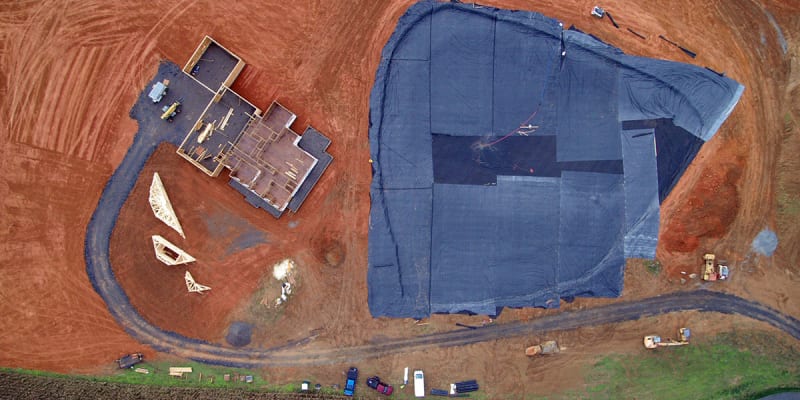
Compare EPDM, PVC, RPE, and other modern liners. Learn about durability, cost, installation considerations, and long-term maintenance for each type.
Read Guide
Plan a natural swimming pond with biological filtration, water-quality monitoring, safe access and site-specific design. Filtration is not disinfection.
Read GuidePlan dredging around measured sediment volume, site access, disposal and permits. Compare methods without assuming additives replace excavation.
Read GuidePlanning a Pond Project?
Construction decisions require site-specific expertise. Our team works with engineers, contractors, and property owners to ensure projects are built to last. Contact us with your site plan and project objectives.
Build a continuous water-retaining system
Follow the detailed pond sealing and compaction construction guide for soil investigation, core trenches, lift placement, and verification. Compare the technical reference for the wider water-balance and repair context.