Aquatic Weed Identification Guide
Identify what's growing in your pond. Understand why it's there. Learn what to do about it.
Aquatic plants are a natural part of every pond and lake ecosystem. Some provide critical habitat for fish, stabilize shorelines, and filter nutrients from the water. Others - especially non-native and invasive species - can take over quickly, block sunlight, deplete oxygen, and turn a healthy pond into a management headache.
The first step in any management plan is accurate identification. Different species require different treatment approaches, and misidentification can lead to wasted time, wasted money, and sometimes making the problem worse. This guide organizes aquatic plants by where they grow - submerged, floating, or emergent - which is also how most treatment decisions are made.
1. Start with location. Where is the plant growing? Underwater, floating on the surface, or emerging from the shoreline? This narrows your options immediately.
2. Compare features. Each species page includes key identification features, common look-alikes, and distinguishing characteristics.
3. Understand the ecology. Not every aquatic plant is a problem. Native species often provide important ecological benefits. We'll help you weigh the pros and cons.
4. Choose a management approach. Each species page links directly to recommended treatments on our shop when management is warranted.
Need help with ID? Send a photo to support@naturalwaterscapes.com - our team identifies aquatic plants daily.
Submerged Aquatic Weeds
Plants that grow entirely or mostly underwater, rooted in bottom sediment or free-floating below the surface. Submerged weeds are often the first to go unnoticed until they've taken hold. Treatment typically requires contact or systemic aquatic herbicides applied to the water column.
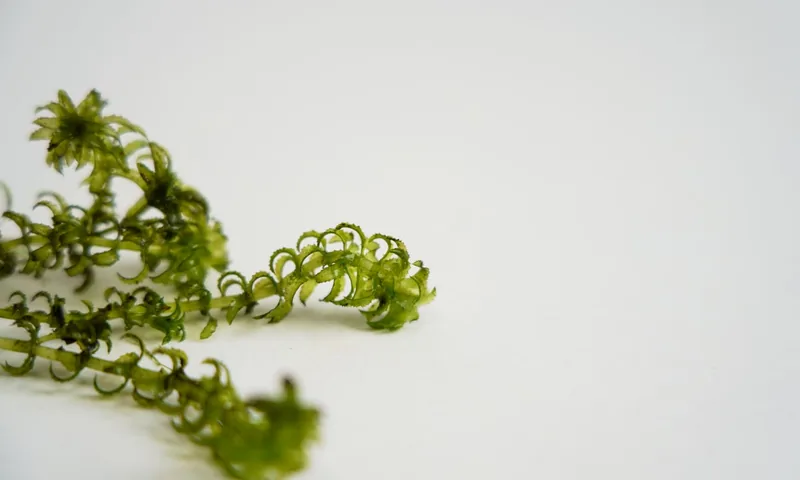
Aggressive invasive that can grow an inch per day. Forms dense mats from bottom to surface. Leaves in whorls of 4–8 with serrated edges and a distinctive midrib spine.
View Details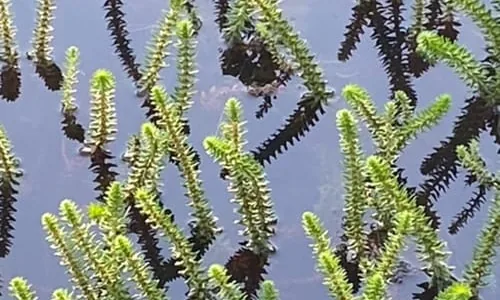
Feathery, finely divided leaves with 12–21 pairs of leaflets. Spreads aggressively through fragmentation. Commonly confused with coontail and fanwort.
View Details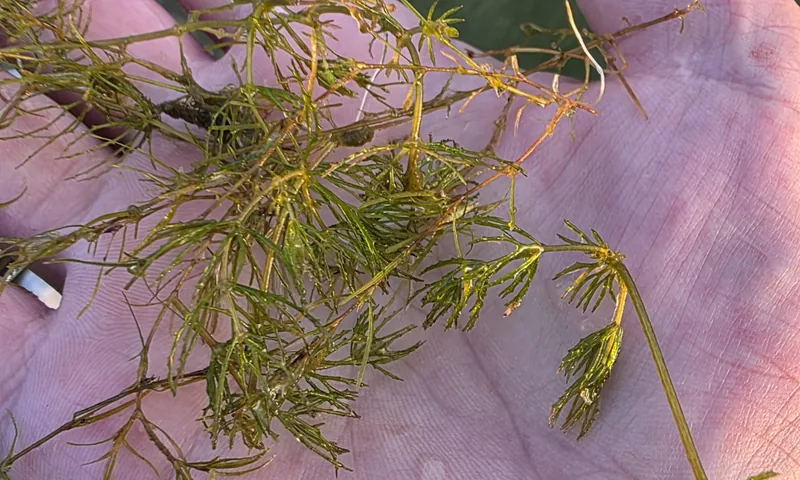
Free-floating with no root system. Forked, rigid leaves arranged in whorls become denser toward stem tips - like a raccoon tail. Stays green year-round.
View Details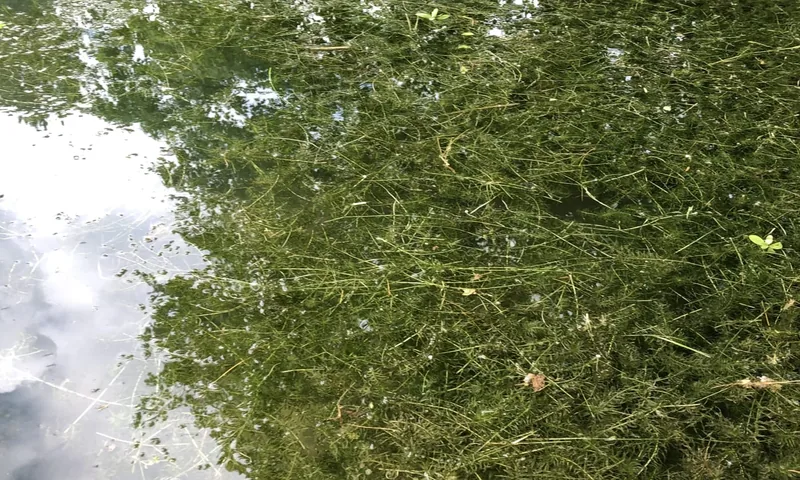
Bright green leaves in whorls of 3 along stems up to 4 feet. One of the few pond plants that stays green through winter. Provides year-round fish habitat.
View Details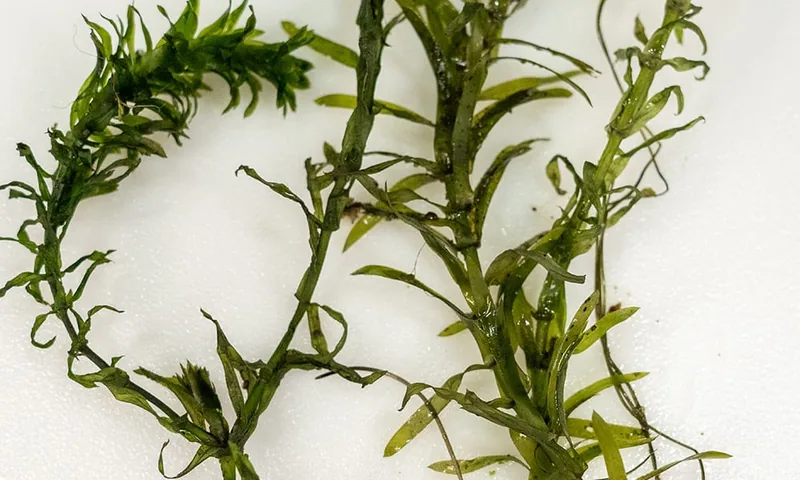
Looks like a larger, more robust version of native elodea. Leaves in whorls of 4–6 (vs. 3 in native elodea). Produces white flowers above the surface.
View Details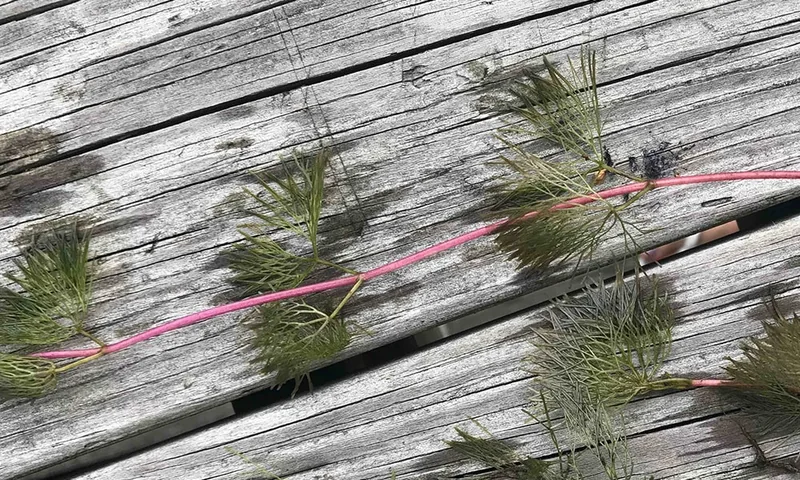
Fan-shaped, finely divided leaves opposite on stems. Often has reddish stems. Commonly confused with milfoil, but fanwort leaves spread like a fan rather than feather.
View Details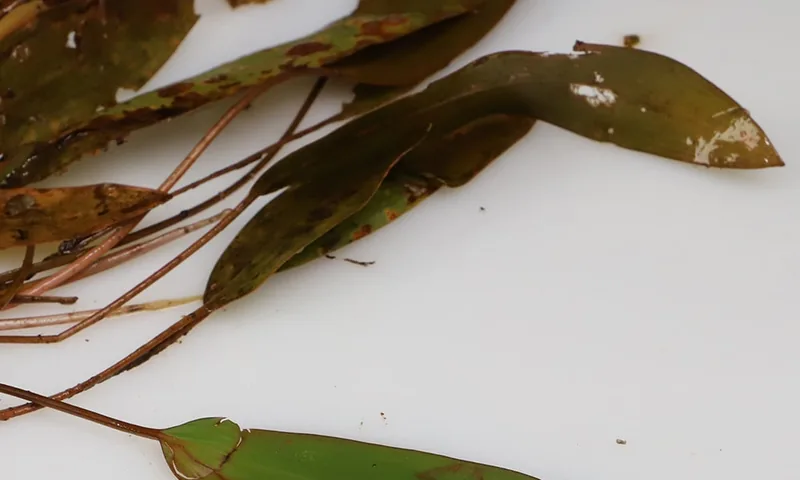
Elongated floating leaves connected to stems up to 6 feet long. Thin submerged leaves along the stem. Important spawning cover for largemouth bass.
View Details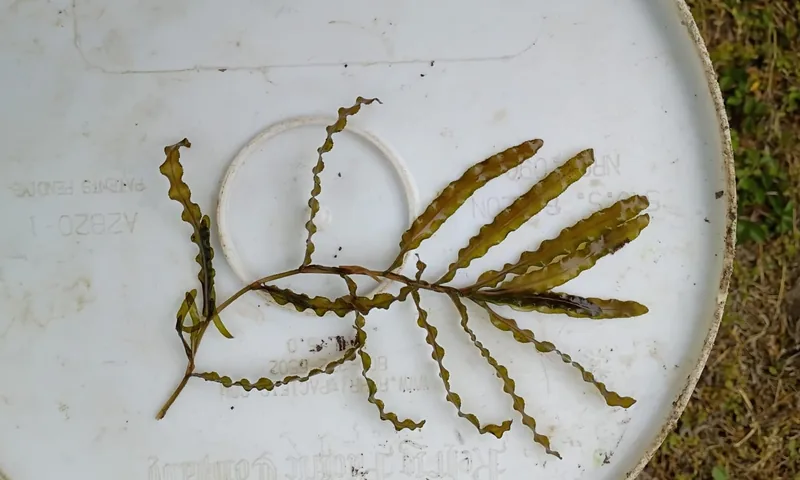
Wavy, lasagna-like leaves that stay submerged. Unusual growth cycle - actively grows in fall and winter, dies back in July. Leaves do not float like American pondweed.
View Details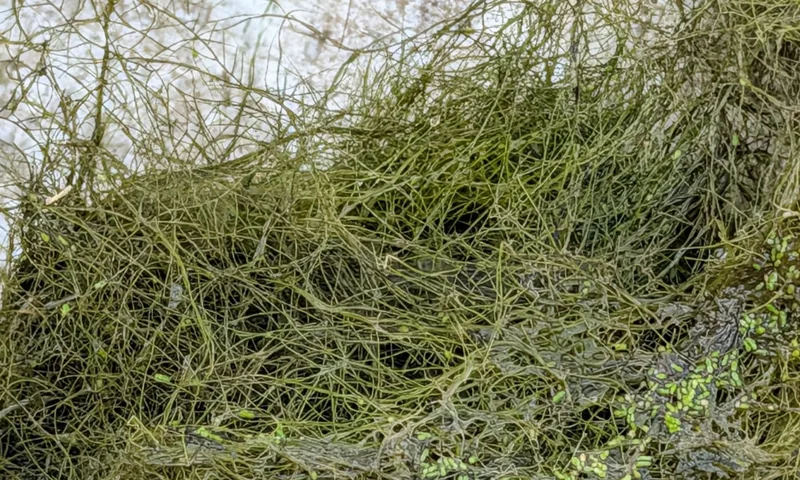
Very thin, thread-like leaves that fan out from the stem. Grows in water up to 8 feet deep. One of the trickier species to positively identify. Excellent waterfowl food.
View Details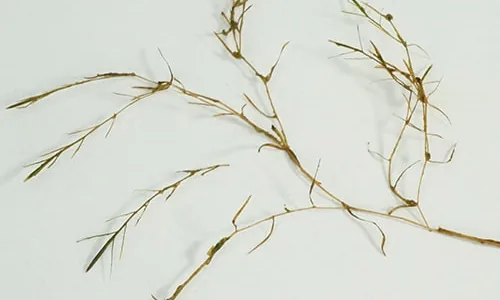
Slender, opposite leaves on branching stems. Easily fragments and can spread rapidly. Provides excellent cover for fish fry but can become problematic in nutrient-rich ponds.
View Details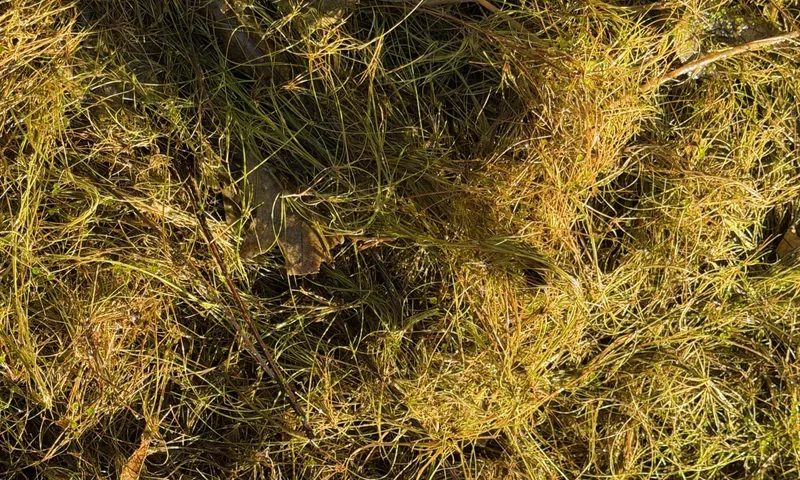
Free-floating carnivorous plant with tiny bladder-like traps that capture aquatic invertebrates. No roots. Yellow flowers above water. Can form dense surface mats.
View Details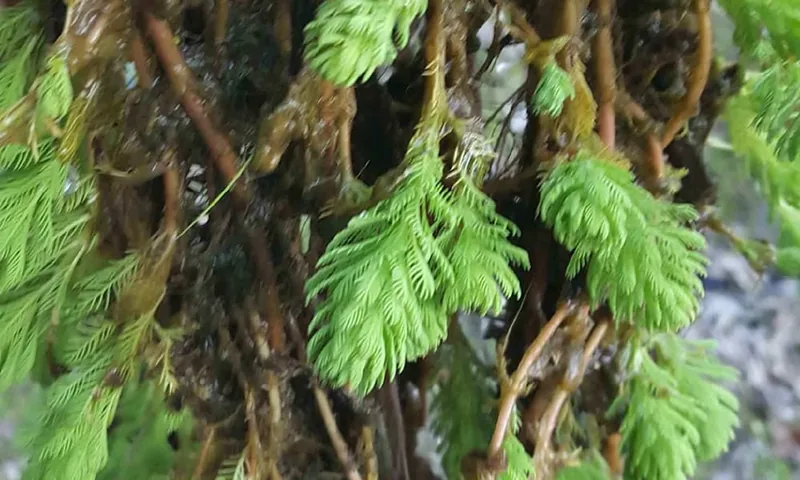
Bright green feathery leaves that extend above the water surface - distinct from other milfoils. Popular in aquariums but highly invasive in natural waterways.
View Details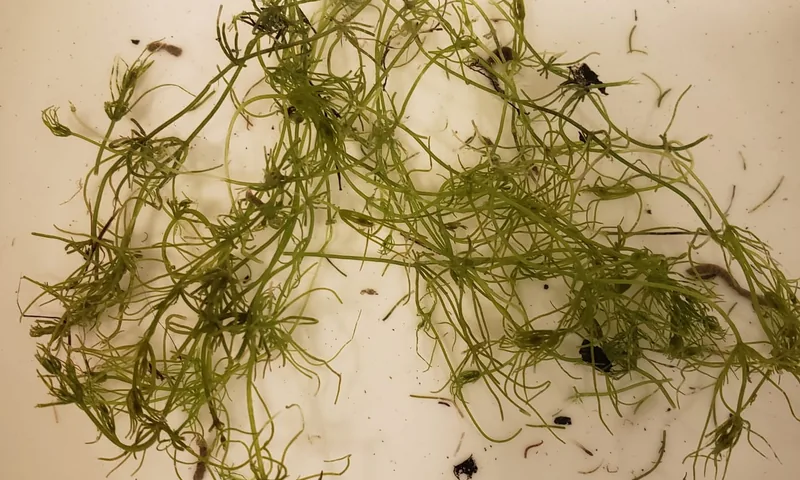
Technically a macroalgae, not a true plant - but universally mistaken for one. Gritty texture, garlic-like smell. Often beneficial: stabilizes sediment and reduces nutrient availability.
View DetailsFloating Aquatic Weeds
Plants that float at or near the water surface, either rooted with floating leaves or free-floating. Dense coverage blocks sunlight and gas exchange, leading to oxygen depletion. Floating weeds spread fast - early intervention is critical.
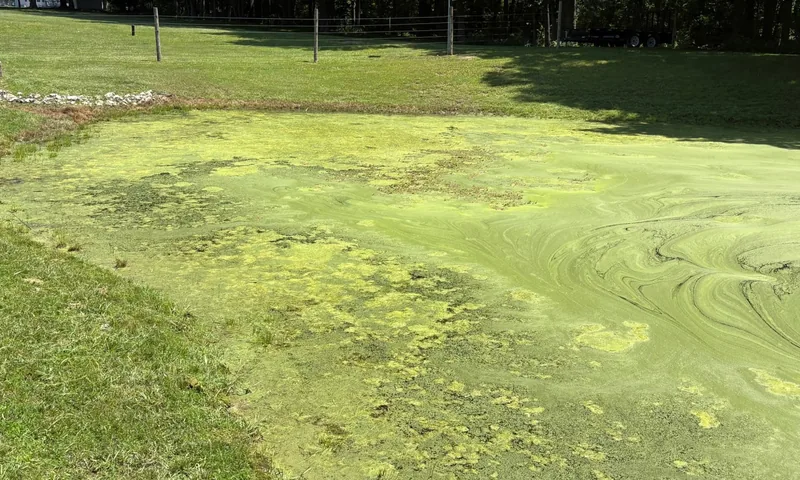
The smallest flowering plants on earth. Duckweed: ¼–½" with tiny roots. Watermeal: pinhead-sized, no roots. One plant becomes a billion in 30 days. Often mistaken for algae.
View Details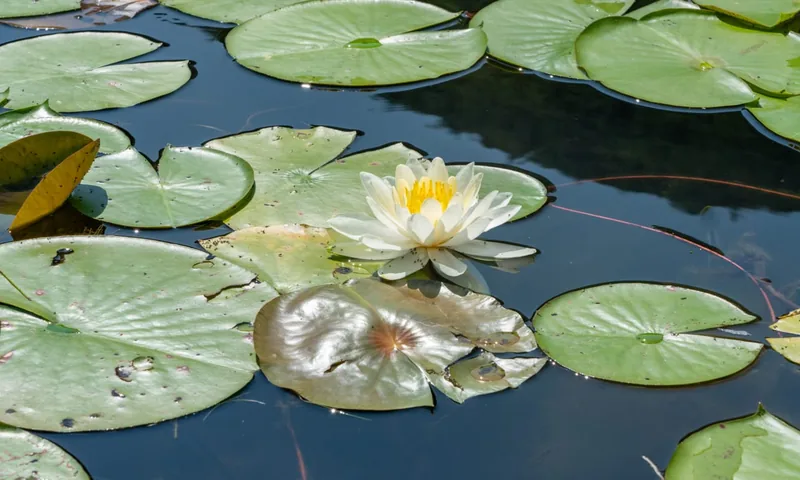
Round floating pads with a characteristic slit. White or yellow flowers. Rooted in sediment with stems reaching the surface. Provide shade and fish cover but can overtake shallow ponds.
View Details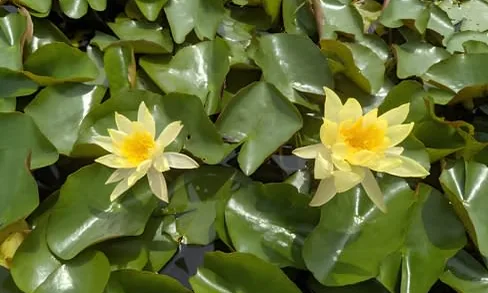
Heart-shaped floating leaves with a deep notch. Yellow globe-shaped flowers. Thick rhizomes. Often confused with water lilies but leaves are thicker and more leathery.
View Details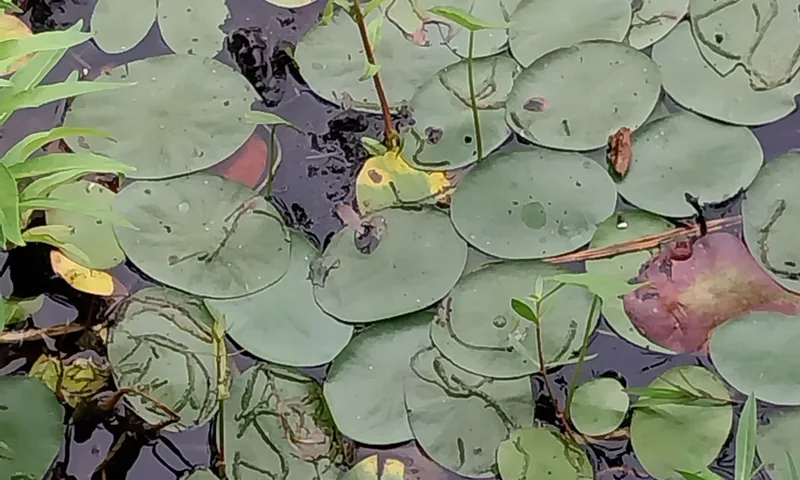
Small oval floating leaves with a thick, gelatinous slime coating the underside and stem. No slit in the leaf like water lilies. Purple flowers.
View Details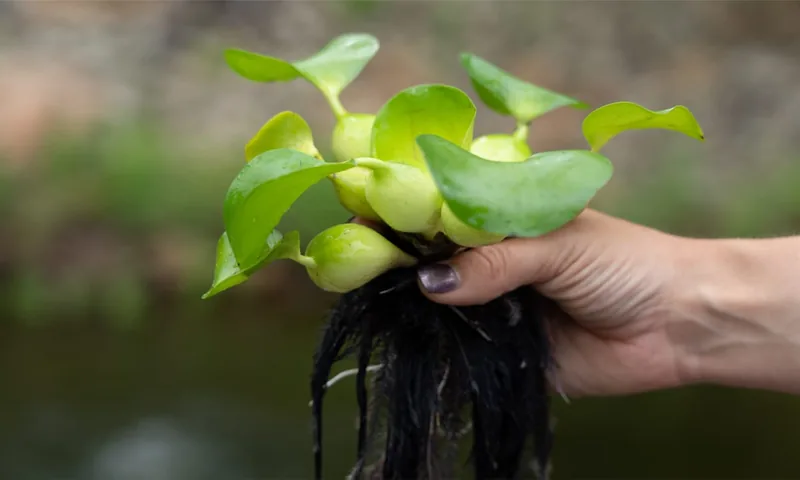
Free-floating with bulbous, spongy stems and lavender flowers. Can double its population in two weeks. Regulated or prohibited in many states.
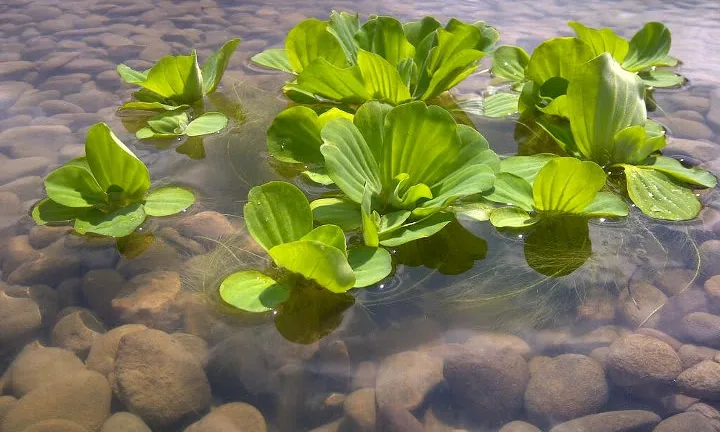
Free-floating rosettes of light green, velvety leaves that look like small heads of lettuce. Long feathery roots dangle beneath. Reproduces by stolons.
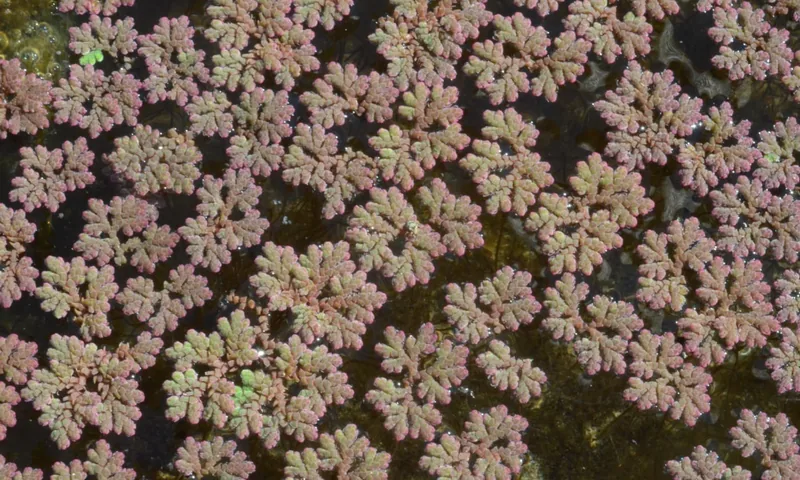
Tiny free-floating fern often confused with duckweed. Turns reddish-brown in fall and high light. Overlapping scale-like leaves. Fixes nitrogen from the air - unique among aquatic plants.
View Details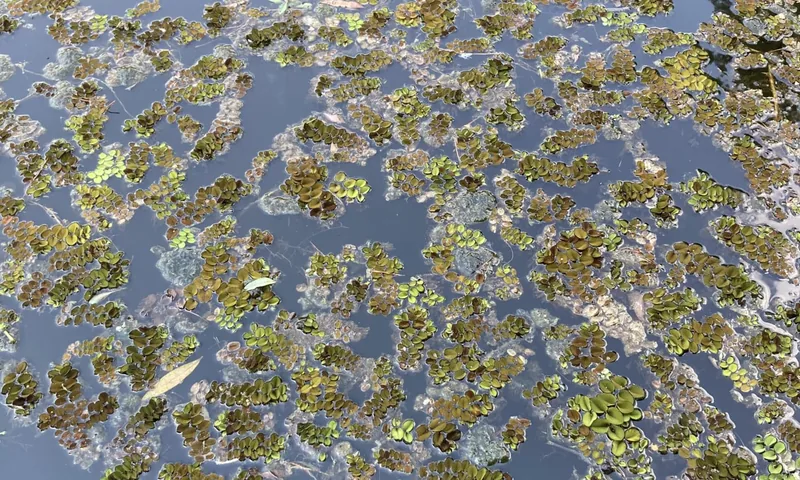
Free-floating fern with paired oval leaves covered in water-repellent hairs. Giant salvinia (S. molesta) is federally listed as a noxious weed. Can double biomass in days.
View DetailsEmergent Aquatic Weeds
Plants rooted in shallow water or saturated soil along shorelines, with most of the plant growing above the water surface. Emergent species can stabilize banks and filter runoff, but aggressive growers choke out native vegetation and restrict water access.
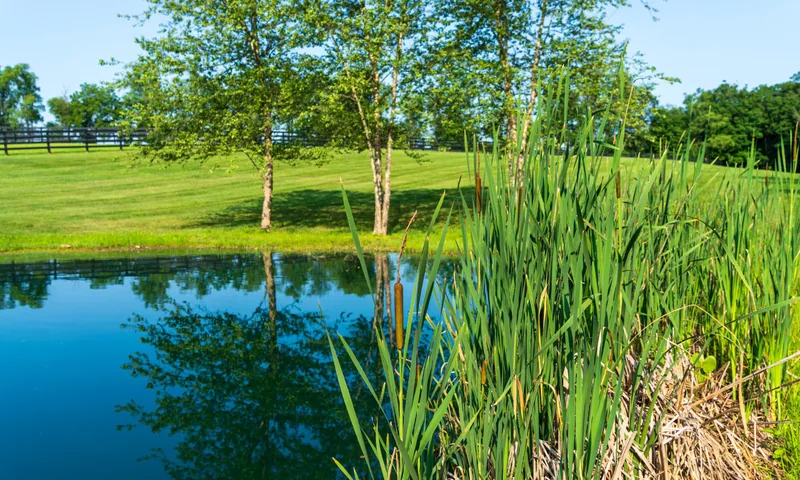
Tall, sword-like leaves with the iconic brown seed head. Native T. latifolia is important wetland habitat, but invasive T. angustifolia and hybrids spread aggressively through rhizomes.
View Details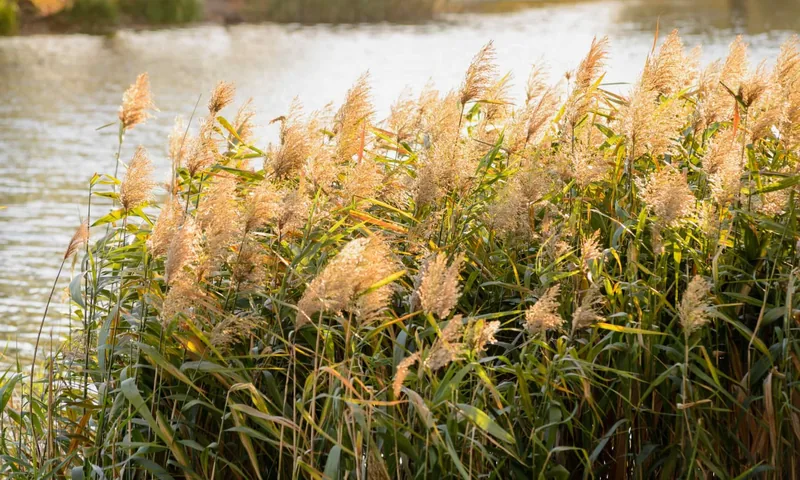
Tall grass reaching 15+ feet with feathery plume seed heads. Invasive subspecies forms dense monocultures that crowd out native vegetation. Spreads by rhizomes and stolons.
View Details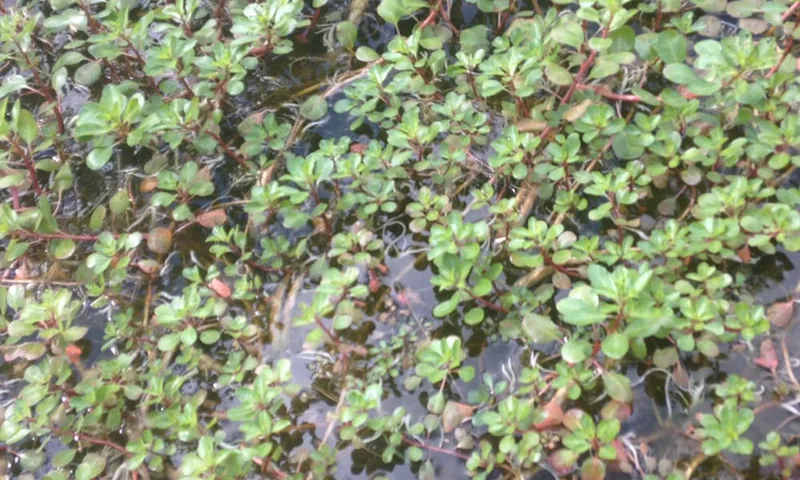
Stems creep up to 15 feet across the surface from shoreline. Small yellow 5-petal flowers. Biomass can double in 3–7 days. Labeled a noxious weed in some states.
View Details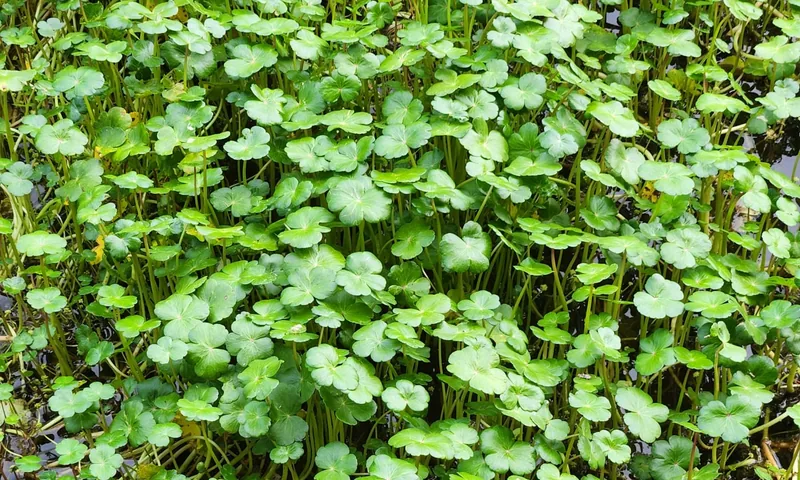
Round, scalloped-edge leaves on stalks from creeping stems. Can spread 7+ inches per day. Floating mats break free and drift. Provides habitat for aquatic life but overtakes shorelines quickly.
View Details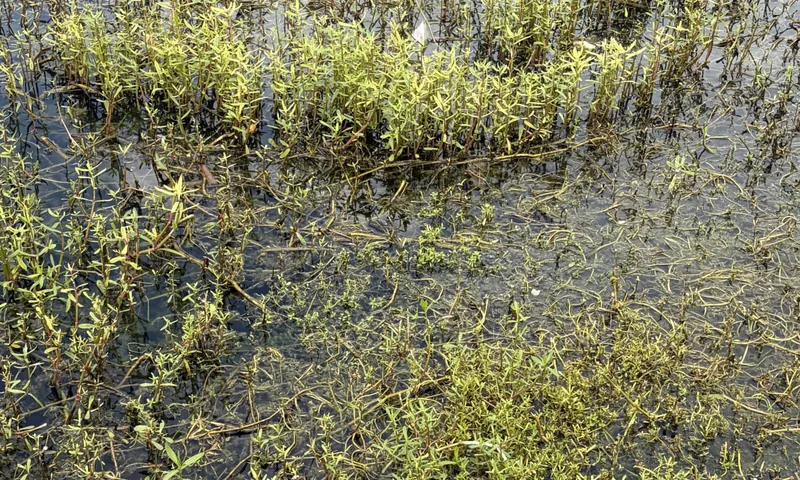
Opposite, lance-shaped leaves on hollow stems. Small white clover-like flowers. Grows on land and in water. Forms dense mats that impede water flow and displace native species.
View Details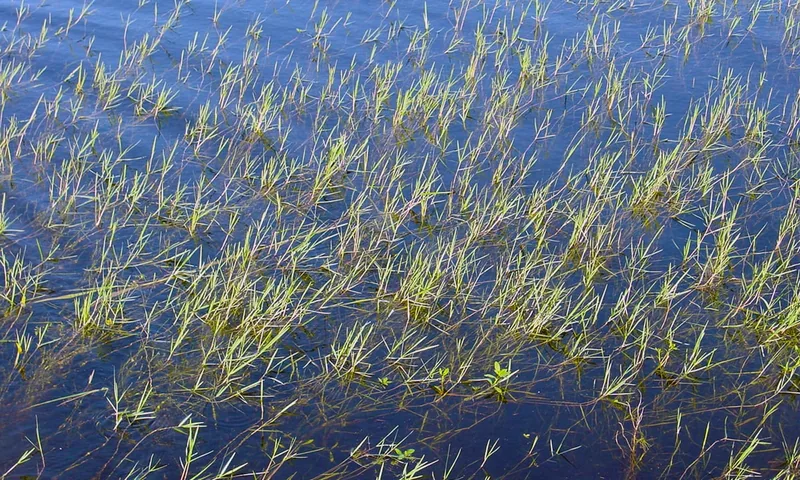
Aggressive perennial grass with stiff, sharp-tipped rhizomes that "torpedo" through soil and pond liners. Extremely difficult to eradicate. Common in the southern US from Texas to Florida.
View DetailsSend us a photo and our team will identify it - usually within a business day. For best results, scoop the plant out of the water and take a close-up shot of the leaves and stems.
Need help with your pond?
Our pond experts are here to help. Give us a call or browse our full product line for science-backed solutions.