Hydrilla
Identification
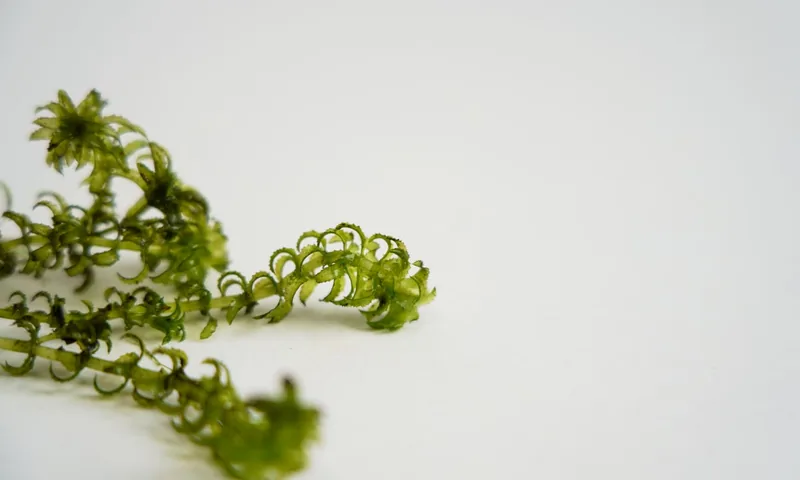
Hydrilla is a submerged plant built around one repeating feature: whorls of leaves circling the stem. Count them. Each whorl carries 4 to 8 leaves, and the leaf edges are visibly jagged and toothed - rough enough that you can often feel it before you see it.
Stems run up to 25 feet and grow as much as an inch per day. Hydrilla tolerates low light, so it establishes in water 15 feet deep or greater where most pond weeds cannot. Once a stem reaches the surface it stops climbing and branches outward, building the dense surface mat that makes hydrilla so disruptive.
Telling Hydrilla from Elodea
These two get mixed up constantly, and the distinction matters because it changes what you treat with. The tell is the leaf edge: hydrilla leaves have jagged-toothed edges; elodea leaf edges are smooth. Run a leaf between your fingers. Elodea also grows in whorls of 3, where hydrilla runs 4 to 8.
Why It Matters
Hydrilla reduces beneficial aquatic vegetation, crowding out the plants that were doing useful work in the waterbody. Thick vegetative cover cuts the oxygen available to fish and other aquatic life. On larger water it clogs propellers and closes off waterways to boats, and heavy infestations put an end to swimming and fishing.
The reproduction is what makes it urgent. Hydrilla spreads aggressively by fragmentation, so every broken piece is a new plant, and tubers can sit dormant in the sediment for years before growing. A treatment that looks like a complete kill can be followed by regrowth from the sediment.
Control Approach
Mechanical. Weed rakes and weed cutters will pull hydrilla out, but because it spreads by fragmentation it is imperative to gather and remove every plant fragment. Fragments left in the water re-establish the infestation you just worked to remove.
Biological. Grass carp love hydrilla, and can be stocked at rates of up to 15 fish per acre.
Barrier. LakeMats manage weeds around docks and swimming areas, where you want a clear zone rather than a whole-pond result.
Chemical. The choice comes down to speed and scope - whether you can treat the entire waterbody, and how fast you need results.
Recommended Treatment Products
These are the products Natural Waterscapes recommends for hydrilla, with the role each one plays. Read the label and confirm the product suits your waterbody before applying.
Common Questions
How do I tell hydrilla from elodea?
Check the leaf edges. Hydrilla leaves have jagged-toothed edges and grow in whorls of 4 to 8. Elodea leaf edges are smooth and grow in whorls of 3.
How fast does hydrilla grow?
Stems can grow as much as one inch per day, and hydrilla can double its mass in just a few weeks.
Will grass carp eat hydrilla?
Yes. Grass carp love hydrilla and can be stocked at rates of up to 15 fish per acre.
Why does hydrilla come back after treatment?
Hydrilla tubers can remain dormant in sediment for years, and the plant spreads by fragmentation, so any pieces left behind can start new growth.
Need help with hydrilla?
Our pond and lake experts can confirm the identification and recommend a treatment plan sized to your waterbody. Send a photo or give us a call.