Elodea
Identification
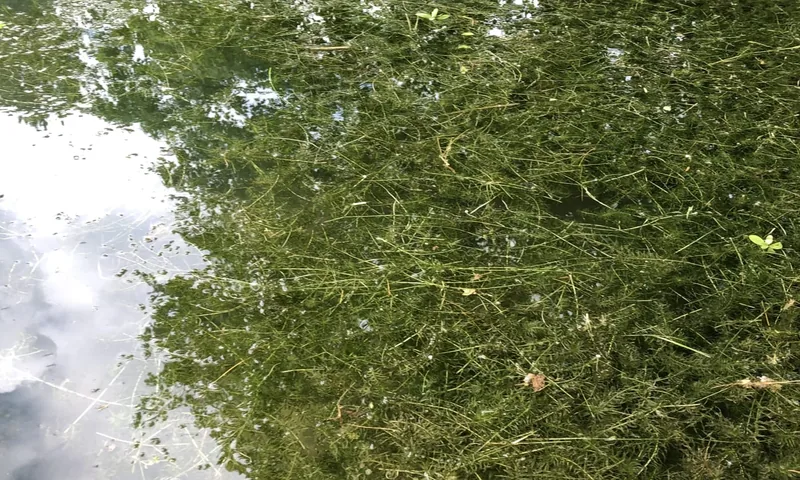
Count the whorl and check the edge. Elodea leaves are arranged in whorls of 3 and the leaf edges are smooth. The plant stays bright green throughout the year, which is unusual and useful - in late season it is often the only green thing left down there.
Stems run 2 to 4 feet in length, with leaves getting closer together and smaller toward the top. Elodea is rooted, so it has a root system anchoring it, which separates it immediately from free-floating coontail.
Telling Elodea from Hydrilla
This is the comparison that matters most, because one is a native plant worth keeping in moderation and the other is an aggressive invasive. Two checks settle it:
Leaf edges. Elodea leaves have smooth edges. Hydrilla leaves have toothed edges.
Whorl count. Elodea grows in whorls of 3. Hydrilla grows in whorls of 4 to 8.
Why It Matters
Elodea provides habitat for aquatic insects and fish, and is a food source for waterfowl, muskrats, and beavers. Because it stays green year round, it provides that habitat and cover year round too - which is worth something in a pond where most vegetation dies back.
Overgrowth is the other side of it. Heavy elodea becomes a nuisance and impairs recreational pond activities, and it can cause depleted oxygen levels and result in fish kills.
Control Approach
Mechanical. Cutting and raking. Because elodea reproduces at rapid rates through fragmentation, thoroughness matters.
Biological. Stocking the pond with triploid grass carp.
Water level. Drawing down the water in the pond during winter is an option where you have that control.
After treatment. Apply pond dye monthly to reduce sunlight, and use Muck Remover pellets on the decaying material.
Recommended Treatment Products
These are the products Natural Waterscapes recommends for elodea, with the role each one plays. Read the label and confirm the product suits your waterbody before applying.
Common Questions
How do I tell elodea from hydrilla?
Elodea leaves have smooth edges and grow in whorls of 3. Hydrilla leaves have toothed edges and grow in whorls of 4 to 8.
Is elodea good for a pond?
In moderation, yes. It provides habitat for aquatic insects and fish and is a food source for waterfowl, muskrats, and beavers, and it stays green year round.
Can elodea cause a fish kill?
Overgrowth can cause depleted oxygen levels and result in fish kills.
Will grass carp eat elodea?
Stocking the pond with triploid grass carp is one of the control options for elodea.
Need help with elodea?
Our pond and lake experts can confirm the identification and recommend a treatment plan sized to your waterbody. Send a photo or give us a call.