
Egeria / Brazilian Elodea
Identification
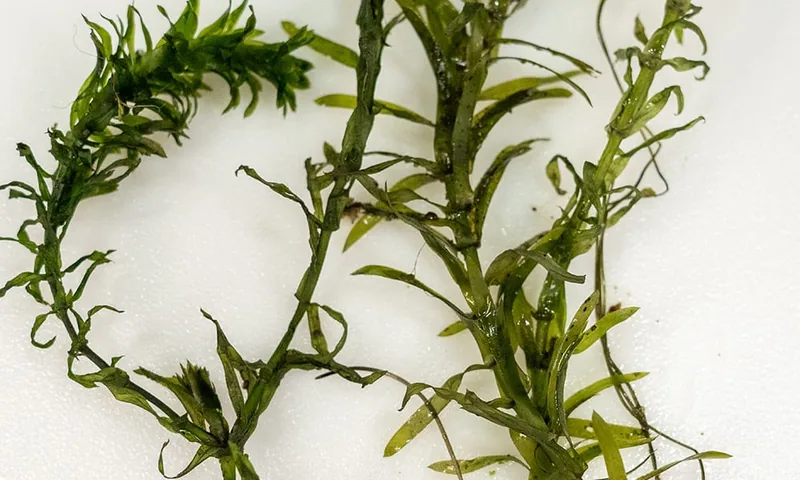
Egeria looks like elodea that has been scaled up. Slender stems carry opposite leaves in whorls of 4 to 6, and the leaves in those whorls have small teeth that feel rough to the touch. That texture is worth checking by hand.
The stems sprawl and reach up to 25 feet. Egeria is fully submerged and rooted, though the sprawling habit can make it look like a floating plant.
Why It Matters
Egeria causes real disruption in an aquatic ecosystem. It reduces dissolved oxygen at night through respiration - the overnight drawdown is the part that catches people out. Dense underwater mats disturb fish habitat and interfere with boating, swimming, and fishing.
The reproduction compounds it. Egeria can produce a new plant from each double node along a stem fragment, so stem breakage accelerates reproduction rather than reducing it. Anything that chops egeria without collecting it makes the problem larger.
Control Approach
Mechanical, with a caveat. Rakes pull mats from the roots and weed cutters trim stems, but this is not the best option: the plant re-establishes from remaining roots and stems, so mechanical work is only beneficial for short-term control.
Biological. Grass carp will eat egeria, though it is not a preferred part of their diet.
Light and barriers. Non-toxic pond dye blocks sunlight, which slows the biological processes driving growth. Lake mats and lake bottom blankets suppress submersed weed growth in designated areas.
Chemical. Aquathol K can be used along with copper compounds - Cutrine Plus - for greater effectiveness.
Recommended Treatment Products
These are the products Natural Waterscapes recommends for egeria / brazilian elodea, with the role each one plays. Read the label and confirm the product suits your waterbody before applying.
Common Questions
Why does raking egeria make it worse?
Egeria can produce a new plant from each double node along a stem fragment, so stem breakage accelerates reproduction. Mechanical removal is only beneficial for short-term control because the plant re-establishes from remaining roots and stems.
Does egeria affect oxygen levels?
Yes. Egeria reduces dissolved oxygen at night through respiration.
Will grass carp eat egeria?
Grass carp will eat egeria, but it is not a preferred part of their diet.
How do I make Aquathol work better on egeria?
Aquathol K can be used along with copper compounds, Cutrine Plus, for greater effectiveness.
Need help with egeria / brazilian elodea?
Our pond and lake experts can confirm the identification and recommend a treatment plan sized to your waterbody. Send a photo or give us a call.