
Creeping Water Primrose
Identification
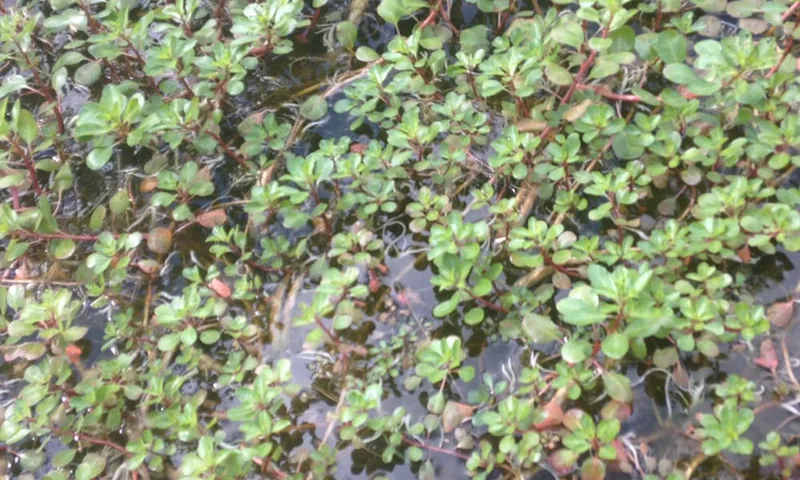
Creeping water primrose announces itself with small yellow flowers carrying 5 petals each. The leaves are oval to sword shaped with defined vein lines - the veining is visible enough to be useful in the field.
The growth habit is in the name. Stems reach up to 3 feet tall, but they creep along the pond surface and can stretch up to 15 feet across. It grows in shallow water and along shorelines in wet areas.
Why It Matters
Creeping water primrose is not a desired aquatic weed and is labelled a noxious weed in some states. It outcompetes desired native shoreline vegetation.
The floating mats cause two further problems. They provide an excellent breeding ground for mosquitos, and they reduce dissolved oxygen and lower pH levels in the water beneath them.
Control Approach
Do not pull it. Physical removal is not recommended, because any fragments left behind will produce new growth - and stem fragmentation is already this plant's main means of spreading. Mechanical work makes the problem larger.
No biological option. There are currently no natural control methods for creeping water primrose.
Chemical. That leaves herbicide as the practical route, with the choice depending on whether the growth is mature and flowering or still establishing.
Recommended Treatment Products
These are the products Natural Waterscapes recommends for creeping water primrose, with the role each one plays. Read the label and confirm the product suits your waterbody before applying.
Common Questions
Can I just pull creeping water primrose out?
Physical removal is not recommended. Any fragments left behind will produce new growth, and stem fragmentation is how this plant primarily spreads.
Are there natural control methods for water primrose?
There are currently no natural control methods.
How far does creeping water primrose spread?
Stems creep along the pond surface and can stretch up to 15 feet across.
Does water primrose affect water chemistry?
Floating mats reduce dissolved oxygen and lower pH levels.
Need help with creeping water primrose?
Our pond and lake experts can confirm the identification and recommend a treatment plan sized to your waterbody. Send a photo or give us a call.