Water Pennywort
Identification
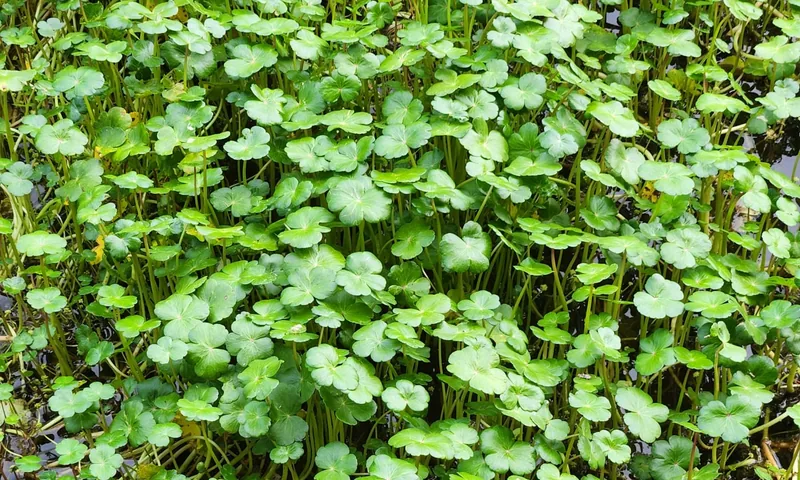
The leaf is the whole identification: round to oval, with scalloped edges, up to 2 inches in diameter. The nickname dollarweed comes from exactly that shape.
Below, it runs rooted creeping stems with stalks growing vertically from them, and it produces round clusters of white flowers. It grows in shallow water and can creep out into the water and float at the surface.
Several species fall under Hydrocotyle, including hydrocotyle vulgaris, hydrocotyle umbellata, hydrocotyle ranunculoides, and hydrocotyle verticillata.
Why It Matters
Pennywort has genuine value. It provides habitat for small fish, frogs, and other aquatic life, hosts many insects, and is food for waterfowl and for fish.
The problem is speed. Floating pennywort can spread over 7 inches in one day, and its biomass can double in 3 to 7 days. That is a plant that goes from noticeable to unmanageable inside a couple of weeks.
Dense floating mats reduce oxygen in the water, outcompete other beneficial vegetation, restrict flow in waterways and drainage outlets, and reduce boating and fishing. Some species are considered invasive throughout the United States and in Europe.
Control Approach
No natural option. There are no effective natural treatment options for control of pennywort.
Given how fast the biomass doubles, treating early matters more here than with most shoreline weeds. All three chemical options are applied directly to the vegetation.
Recommended Treatment Products
These are the products Natural Waterscapes recommends for water pennywort, with the role each one plays. Read the label and confirm the product suits your waterbody before applying.
Common Questions
How fast does water pennywort spread?
Floating pennywort can spread over 7 inches in one day, and its biomass can double in 3 to 7 days.
Are there natural treatments for pennywort?
There are no effective natural treatment options for control of pennywort.
Is water pennywort good or bad?
Both. It provides habitat for small fish, frogs, and other aquatic life, hosts insects, and feeds waterfowl and fish - but dense mats reduce oxygen, outcompete other vegetation, and restrict flow.
How big are pennywort leaves?
Round to oval with scalloped edges, up to 2 inches in diameter.
Need help with water pennywort?
Our pond and lake experts can confirm the identification and recommend a treatment plan sized to your waterbody. Send a photo or give us a call.