Alligator Weed
Identification
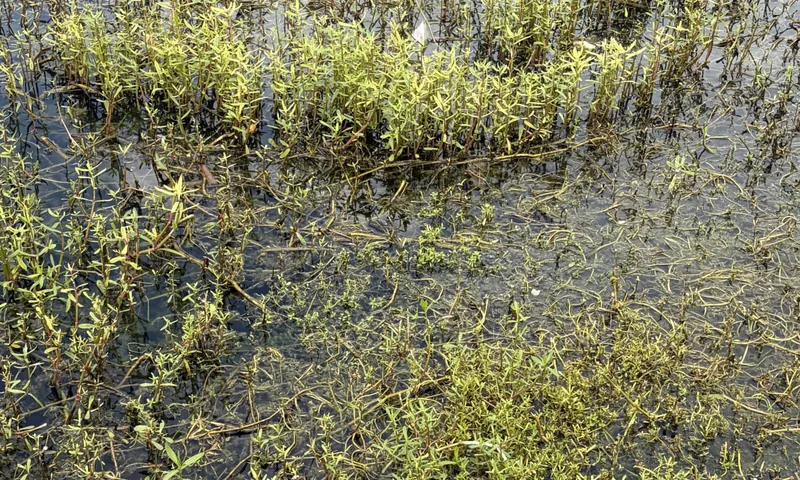
Two features together make alligator weed unmistakable: narrow sword-like leaves growing off opposite sides of a hollow stem. Squeeze the stem - it is hollow, and that is the detail that settles most identifications. Stems vary in color from green to red, and the plant carries small white flowers on the stem.
It is a rooted emergent weed. It begins its growth rooted in the bottom of the pond, grows up, and emerges from the water, in shallow areas near the shoreline.
Telling Alligator Weed from Smartweed
Smartweed is the common confusion, and there are three checks:
Alligatorweed blooms a white flower, produces a hollow stem, and its leaves grow out on opposite sides of the stem.
Smartweed leaves come down and wrap around the stem, and the leaves grow out alternate from the stem rather than opposite.
Why It Matters
Alligator weed is invasive and not native to the United States. It grows in thick dense mats along pond edges, and those mats make it very difficult for wildlife to reach the shoreline. It also prevents beneficial native plants from growing near the edges.
Spread is structural: the stems have nodes from which other stems grow, so vegetation spreads easily from broken pieces.
Control Approach
Mechanical is counterproductive. Alligator weed can be trimmed, but it will regrow from the roots and stems left behind, and repeated maintenance becomes necessary. Mechanical removal is not recommended because it increases the chances of spreading.
Chemical. Speed and safety profile are the trade-off - Propeller is fast acting, while Clearcast acts more slowly but imazamox is described as a safer alternative to glyphosate.
Recommended Treatment Products
These are the products Natural Waterscapes recommends for alligator weed, with the role each one plays. Read the label and confirm the product suits your waterbody before applying.
Common Questions
How do I tell alligator weed from smartweed?
Alligatorweed blooms a white flower, has a hollow stem, and its leaves grow out on opposite sides of the stem. Smartweed leaves come down and wrap around the stem and grow alternate rather than opposite.
Should I cut or pull alligator weed?
Mechanical removal is not recommended because it increases the chances of spreading. Trimmed plants regrow from the roots and stems left behind.
Is alligator weed native?
No. It is invasive and not native to the United States.
Is there a gentler alternative to glyphosate for alligator weed?
Clearcast acts more slowly than Propeller, and imazamox is described as a safer alternative to glyphosate.
Need help with alligator weed?
Our pond and lake experts can confirm the identification and recommend a treatment plan sized to your waterbody. Send a photo or give us a call.