
Watershield
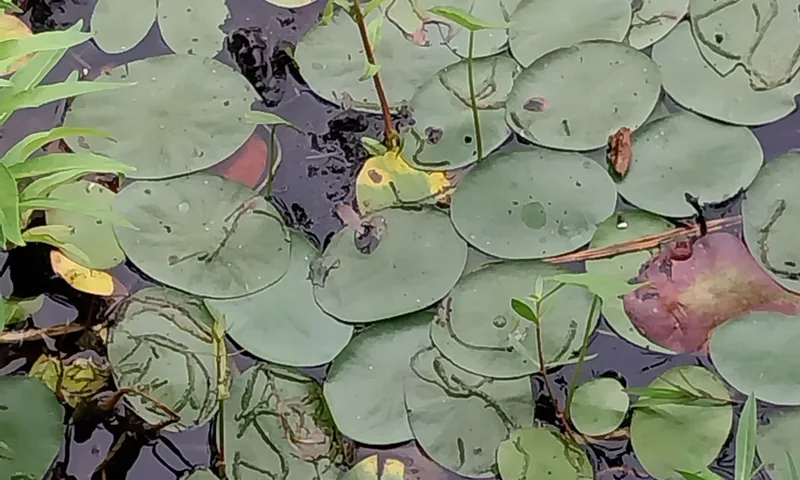
Identification
Turn a leaf over. Watershield's defining feature is the slimy coating on the bottom of the leaves - it is unmistakable once you have felt it, and it is the reason hand-pulling this plant is so unpleasant.
Above the water, the leaves are oval shaped and 1 to 4 inches wide, floating at the pond surface on long purple stems. It produces a small purple flower and grows from a rooted rhizome. Growth can occur in up to 6 feet of water.
Telling Watershield from Water Lilies
Watershield is mistaken for lily pads, but the leaves are smaller and oval in shape. Water lily pads are larger and notched. And again - check the underside for slime.
Why It Matters
Watershield provides habitat for bluegill, largemouth bass, and bream, and food for waterfowl and other wildlife. In shallow ponds, however, it can become a nuisance weed and require management.
Its spread is nutrient-driven: watershield can spread quickly in a pond or lake when nutrient levels are elevated. Rapid expansion is often a signal about what is coming into the water.
Control Approach
Mechanical. Physical removal with a lake rake works, but hand-pulling is difficult because of the slime coating on the leaves and stems. Reproduction from left-over roots or seeds means thoroughness matters.
Early season, from the bottom. Navigate granules sink to the bottom and kill at the root system, with results in 7 to 10 days. Best used for early season control.
Mature growth, from the top. Clearcast is a liquid applied by tank sprayer to mature vegetation above the water surface. All pads must be sprayed. Results in 7 to 10 days.
Recommended Treatment Products
These are the products Natural Waterscapes recommends for watershield, with the role each one plays. Read the label and confirm the product suits your waterbody before applying.
Common Questions
How do I identify watershield?
Oval floating leaves 1 to 4 inches wide on long purple stems, with a distinctive slimy coating on the underside of the leaves.
How is watershield different from a water lily?
Watershield leaves are smaller and oval in shape compared to lily pads, and they have a slimy coating underneath.
Why is watershield hard to pull by hand?
The slime coating on the leaves and stems makes hand-pulling difficult. A lake rake is the more practical mechanical option.
Why is watershield spreading in my pond?
Watershield can spread quickly in a pond or lake when nutrient levels are elevated.
Need help with watershield?
Our pond and lake experts can confirm the identification and recommend a treatment plan sized to your waterbody. Send a photo or give us a call.