Sago Pondweed
Identification
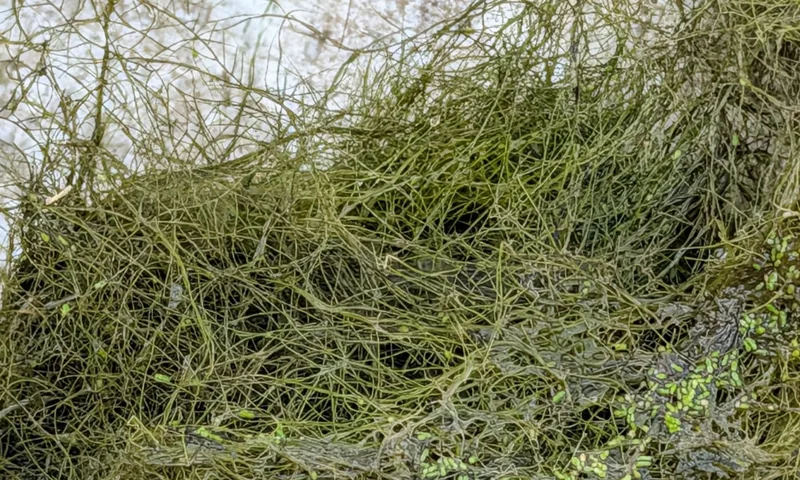
Sago does not look like the rest of the pondweed family. The leaves are long and narrow - up to 5 inches - and resemble pine needles. They are arranged alternately along the stems, not in whorls.
The clearest structural tell: unlike other members of the pondweed family, sago does not produce floating leaves. All growth remains submerged. Stems branch off close to the surface, and both stems and leaves are of similar width. Small clusters of nuts attached to a stem appear at the water surface.
It is a rooted rhizome producing growth up to 3 feet long, occurring throughout the entire United States in water up to 8 feet deep. Former scientific names include Potomogeton pectinatus and Stuckenia pectinatus.
Why It Matters
Sago is a native submerged weed that does a lot of quiet work. It provides habitat for invertebrates and young fish, and it is a great source of food for waterfowl. The root systems stabilize shoreline areas against erosion, and submerged plants like this absorb nutrients such as nitrate and phosphate from the water.
As with other natives, there is a difference between weed management and complete kill. A pond with some sago in it is generally better off than one without.
Control Approach
Light. Pond dye, applied early season before growth begins and maintained throughout the year.
Mechanical. A pond rake, needed multiple times per year.
Biological. Grass carp can eat 2 to 3 times their own body weight in vegetation per day.
Chemical. Aquathol, Propeller, Sonar, the Duckweed Destroyer Pack, and Tsunami DQ are all listed options for sago.
Recommended Treatment Products
These are the products Natural Waterscapes recommends for sago pondweed, with the role each one plays. Read the label and confirm the product suits your waterbody before applying.
Common Questions
How do I tell sago pondweed from other pondweeds?
Sago does not produce floating leaves - all growth stays submerged. Its leaves are long, narrow, resemble pine needles, and are arranged alternately along the stem.
Is sago pondweed good for a pond?
It is native and beneficial. It provides habitat for invertebrates and young fish, feeds waterfowl, stabilizes shoreline against erosion, and absorbs nitrate and phosphate from the water.
How deep does sago pondweed grow?
In water up to 8 feet deep.
What is in the Duckweed Destroyer pack?
Harvester diquat, Cutrine copper complex, and Aquatistick surfactant.
Need help with sago pondweed?
Our pond and lake experts can confirm the identification and recommend a treatment plan sized to your waterbody. Send a photo or give us a call.