Southern Naiad
Identification
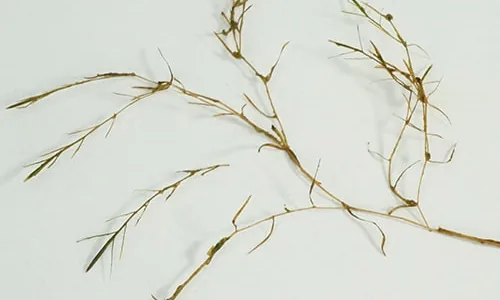
Southern naiad is a small-leaved submerged plant. It produces many small leaves along the stem - the leaves are only about 1 inch long - and they get gradually smaller toward the tip of the stem. The leaves are arranged in whorls. Stems grow up to 2 feet in length.
It occurs throughout the United States and grows in water up to 15 feet deep where the water is clear.
Telling Naiad from Sago Pondweed
Naiad is often confused with sago pondweed, and the arrangement settles it. Southern naiad leaves are arranged in whorls; sago pondweed leaves are arranged oppositely in sheaths. Leaf length helps too - naiad leaves are about 1 inch, while sago pondweed leaves can vary from 1 to 6 inches.
Why It Matters
This pond weed is native to the United States, and naiad provides habitat for young fish and invertebrates. Because it can spread easily through fragmentation, close management is recommended rather than eradication.
Its annual habit is worth knowing: southern naiad dies back each year and repopulates from seed. A clear pond in late season does not mean the seed bank is gone.
Control Approach
Light. Pond dye as an early season application - before growth begins, maintained throughout the year.
Biological. Grass carp can eat 2 to 3 times their own body weight in vegetation each day.
Chemical. Fast contact options and slower whole-pond systemics are both available; the choice depends on whether you can treat the whole waterbody and how quickly you need the result.
Recommended Treatment Products
These are the products Natural Waterscapes recommends for southern naiad, with the role each one plays. Read the label and confirm the product suits your waterbody before applying.
Common Questions
How do I tell southern naiad from sago pondweed?
Southern naiad leaves are arranged in whorls. Sago pondweed leaves are arranged oppositely in sheaths. Naiad leaves are about 1 inch long; sago leaves vary from 1 to 6 inches.
Is southern naiad native?
Yes. It is native to the United States and provides habitat for young fish and invertebrates.
Does southern naiad come back every year?
It dies back each year and repopulates from seed.
How deep does southern naiad grow?
In water up to 15 feet deep, if the water is clear.
Need help with southern naiad?
Our pond and lake experts can confirm the identification and recommend a treatment plan sized to your waterbody. Send a photo or give us a call.