Curly Leaf Pondweed
Identification
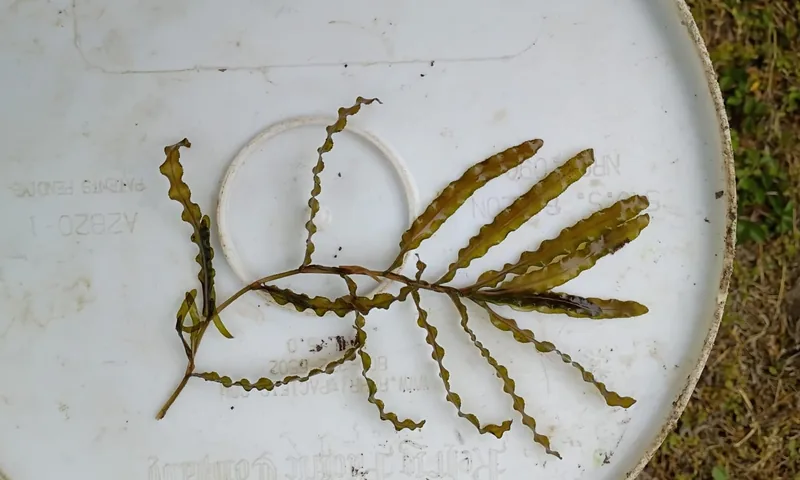
The leaf edge is unmistakable once you have seen it: narrow leaves up to 4 inches long, wavy, similar to a piece of lasagna. Nothing else in a typical pond does that.
It is a rooted submerged pond weed producing growth up to 3 feet long, and it occurs in water up to 15 feet deep. Critically, the leaves do not float at the surface the way American pondweed's do - that single check separates the two.
The Backwards Growth Cycle
This is the part that catches pond owners out. Unlike other pondweeds, Potamogeton crispus begins its growth cycle in fall and winter. It is present in the pond before most other weeds show up, so the first green growth of the year is often this.
It then dies back around July, which is when seeds are dropped. A pond that looks clear in August was not necessarily treated successfully - the plant may simply have finished its year. Time treatment to the plant's calendar, not the season you expect.
Why It Matters
Curly leaf pondweed is considered non-native throughout the United States. It spreads mainly from the seeds it produces, and can move from waterbody to waterbody on plant fragments carried by boats and equipment.
Control Approach
Light. Pond dye is an early season application, and given this plant's fall-and-winter start, early means earlier than you think. Dye must be applied before growth begins and maintained throughout the year.
Mechanical. A pond rake, needed multiple times per year.
Biological. Grass carp can eat 2 to 3 times their own body weight in vegetation per day.
After treatment. Use pond dye monthly for best results, and Muck Remover pellets on the decaying material.
Recommended Treatment Products
These are the products Natural Waterscapes recommends for curly leaf pondweed, with the role each one plays. Read the label and confirm the product suits your waterbody before applying.
Common Questions
Why does curly leaf pondweed appear before other weeds?
It begins its growth cycle in fall and winter, unlike other pondweeds, so it is present in the pond before most other weeds.
Why did my curly leaf pondweed disappear in July?
Curly-leaf dies back around the month of July. That is when it drops its seeds - it is the plant's normal cycle, not necessarily a sign the treatment worked.
How do I tell it from American pondweed?
Curly leaf pondweed leaves do not float at the surface the way American pondweed leaves do, and its leaves are wavy, similar to a piece of lasagna.
Is curly leaf pondweed native?
It is considered non-native throughout the United States.
Need help with curly leaf pondweed?
Our pond and lake experts can confirm the identification and recommend a treatment plan sized to your waterbody. Send a photo or give us a call.